White label, private label or contract manufacturing: which one?
By Sanjeet Kumar, Executive Director, BKFPCL · Updated · 2 min read
Key takeaways
White label means you sell a product the maker already produces, in your pack. Private label means the maker produces it to your specification. Contract manufacturing means you own the recipe and a factory makes it.
White label is the cheapest and fastest. Private label gives more control for a higher minimum. Contract manufacturing gives the most control and needs the most money and paperwork.
A first-time founder should start with white label or private label on one product and move up when sales are steady.
In all three, the brand owner’s name, address and FSSAI licence number appear on the label.
The three terms in plain words
People mix these words up, and suppliers use them loosely. Agree on the meaning before you ask for a quote.
Model
What it means
Who owns the recipe
Typical example
White label
The maker sells a ready product. You put your label on it.
The maker
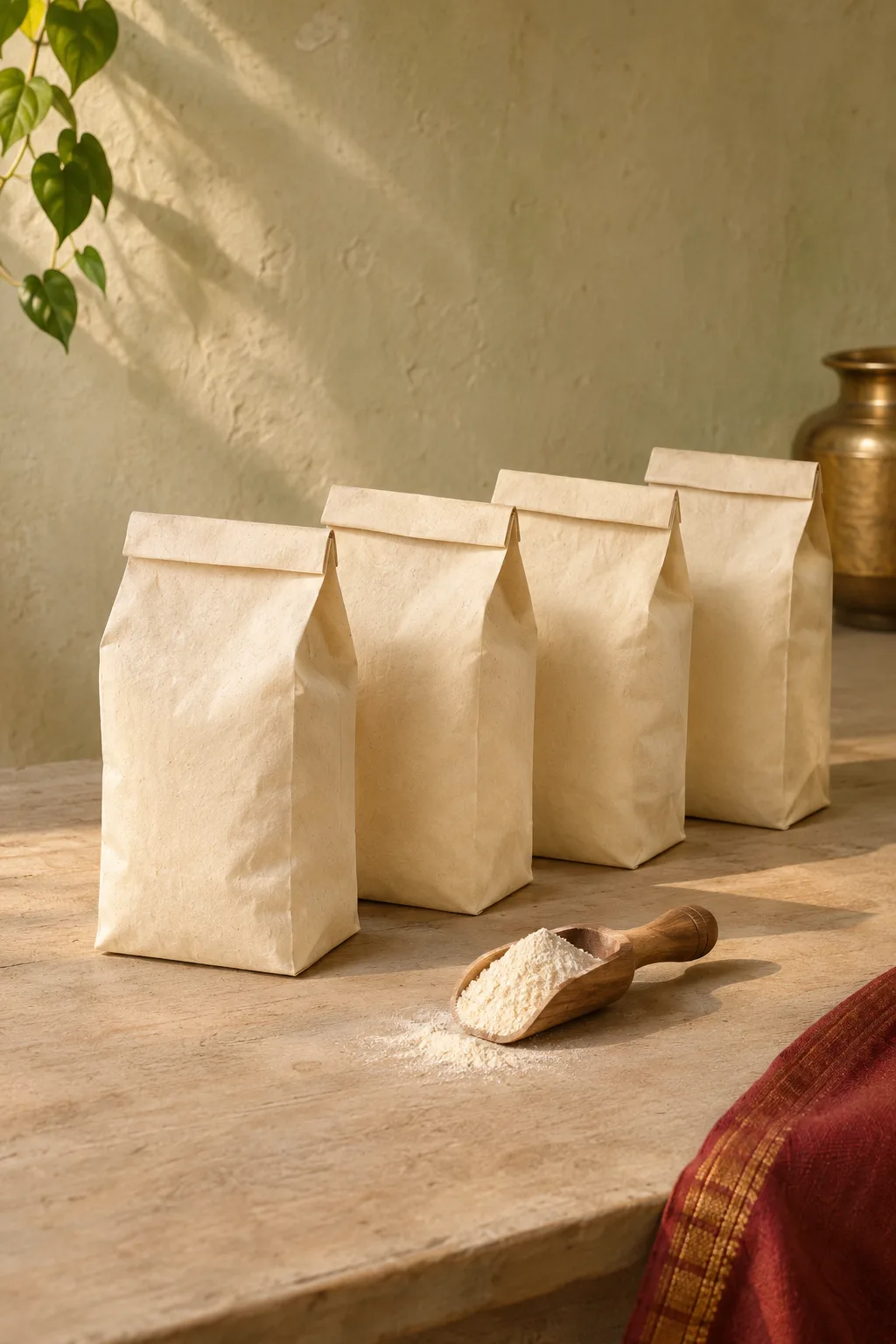
Ragi flour packed in your pouch
Private label
The maker produces to your specification, only for you.
Shared: you set the spec, the maker runs it
A ragi and jowar blend at a mesh you choose
Contract manufacturing
A factory makes your own recipe in its plant.
You
Your millet cookie recipe, baked by a partner
White label: fastest and cheapest
You choose a product that already exists, such as ragi flour, and sell it under your name. There is little to design and little to test. The supplier’s standard spec is the spec.
The trade-off is sameness. Another brand can buy the same flour from the same supplier. You win on your pack, your story, your price and your service, not on the product. Read white label flour and grains for what to decide before you start.
Private label: more control
You ask the supplier to change something: a blend of two millets, a finer or coarser mesh, a particular pack size or a sealed pouch with your print. The product is then yours alone to sell.
This costs more because the supplier sets up a special run. That is why the minimum order is higher. Our minimum order for a new custom pack is ₹5 lakh. If you take Grain Sutra packs or bulk packing, it can be lower and is agreed on a call.
Contract manufacturing: your recipe, their plant
This is the route for finished foods such as cookies, ready mixes, flakes or pasta. You supply the recipe and the specification. A licensed factory makes it. You own the formula, so you carry the most risk and the most upside.
It needs the most money: tooling, test batches, packaging and a large first run. It also needs a clear agreement on who owns the recipe, who is liable for a quality fault and what happens to unsold stock. Have a lawyer read it. We can introduce partners for finished products. We supply the grain and flour.
Which one should you pick?
Use this short test.
If you are testing an idea with little cash, choose white label on one product.
If the product works and you want something rivals cannot copy, move to private label.
If your product is a finished recipe, choose contract manufacturing and use our grain as the ingredient.
What does not change in any model
Whoever makes it, you are the brand owner. The brand owner’s name, address, FSSAI logo and licence number go on the label. If the maker or packer is a different business, its licence number goes on the label too. So you need your own food registration or licence before you sell. The details are in FSSAI and label rules for a new packaged food brand.
Barahiya Krishi Fed Producer Company Limited supplies grain, flour and pulses in bulk, packs under your label, blends to your recipe and introduces partners for finished products. We start most new brands on white label or private label.
What is the difference between white label and private label?+
In white label the maker sells its standard product with your label. In private label the maker produces to your own specification, only for you. Private label gives more control and usually a higher minimum order.
Is white label legal in India?+
Yes. Many food brands sell products made by others. The brand owner must carry its own FSSAI registration or licence and print its name, address and licence number on the pack, and the maker’s licence number if the maker is a different business.
Who is responsible if the product is bad?+
The brand owner answers to the customer and to the regulator. Your agreement with the maker should say who pays for a bad lot. Get it in writing, and have a lawyer check it.
Can I start with a very small order?+
Our minimum order for a new custom pack is ₹5 lakh. If you take Grain Sutra packs or bulk packing, it can be lower and is agreed on a call. Read pilot batches and minimum orders.
 TM